
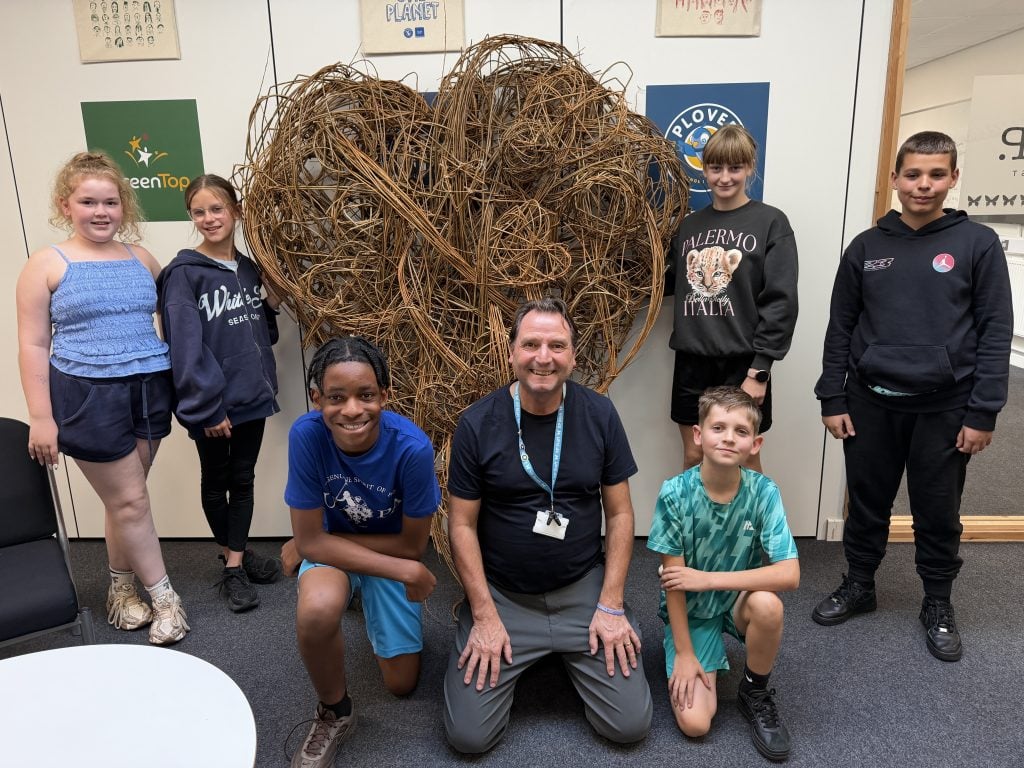
On a Tuesday afternoon in the third week of this term, I spent some time speaking to Year 8 students at XP East Cezar, Eifa, Jasmina, Karina, Noah and Tyrell who are in their third week of a new Learning Expedition entitled, Being Human. The Guiding Question for this current Learning Expedition is ‘What does it Mean to Be Human?’ and students are already well into Case Study One where they have linked studies across disciplines such as Science, Maths, Geography, RE and English. I’d heard that the students had already experienced fieldwork and working with experts and I wanted to get their views on the purpose and impact of this imperative aspect of Learning Expeditions.
Firstly I asked students to describe the fieldwork they had already engaged with as part of the Expedition. Noah eloquently described the visit to Danes Dyke on the North Yorkshire coast where they had searched for, found and examined fossils: “We went to a beach to crack open rocks and they had fossils in them. So we found, like, uh, shells, we found bones, which was quite interesting. We saw how things were preserved, and we were looking to see how they fossilised and how life kind of works which links to our Guiding Question.”
“We did go to Sandall Beat Wood on immersion and it was connected to our learning.”
Building on Noah’s comments, Eifa also talked about the more local fieldwork that they’d experienced as part of their ‘Immersion week’ at the start of the Expedition. “We did go to Sandall Beat Wood on immersion and it was connected to our learning. We worked in different groups throughout the day, and we had to go and search and find bugs and then classify them using. We did other activities too like map reading and service learning which were all about working together.”
Karina then spoke about how some of the group had been to a local care home to interview residents. It was really interesting how the students who had engaged in this fieldwork were clear how this strengthened and deepened their understanding of the Expedition. Karina explained: “We went there to meet elderly people, and to ask them questions, particularly what they thought it meant to be human? Obviously, we’re only eleven or twelve, so they know more about what the question means so we got really interesting answers. They are a lot older than us, so they’re a lot more experienced in life, so they had more stories, and they told us their experiences and their memories. So we got to learn quite a bit about their perspective on life.”
‘It connects you directly to the learning.”
After these initial responses I asked the students, “Why do you think fieldwork is such an important part of Learning Expeditions? Cezar started with this comment. “I think some students might like fieldwork more, because it suits how they learn, it is active. So instead of staring at a TV about how fossils were made, on fieldwork you go out and find them, investigate and experience them. It connects you directly to learning.”
Jasmina built on this by adding: “Fieldwork is fun, too.” Instead of passively learning about a subject, “we experience it and work together and properly feel the subject instead of just watching some guy on the internet do it.” It was interesting how students very quickly perceived how fieldwork lends itself to building community.
“We go out into the world and explore subjects and have real experiences. You bring the learning from fieldwork back into your Expedition at school.”
Tyrell added: “We go on fieldwork, because it also helps with the Expedition you’re doing and what you’re going to be learning about in the future back in school. We go out into the world and explore subjects and have real experiences. You bring the learning from fieldwork back into your Expedition at school.”
Noah developed the impact fieldwork has on engaging learners from a culturally engaging perspective, he said: “I feel like fieldwork gives you a great opportunity to work together, but also, sometimes students who aren’t as engaged during class, but when they’re doing something out and about, and experiencing it, they’re more engaged, and they have a grasp of the topic. They remember it more, have a better understanding then this helps them. If students have engaged with work during fieldwork they are more likely to be engaged in class and they’ll work harder to be a better version of themselves, I guess.”
“We’re about memory at XP. If you go out and do things, you remember them more, don’t you?”
Students clearly began to make the link between our dimension of character growth and the impact this has on learning and culture. They spoke eloquently about the purpose of fieldwork, deconstructing how its impact is heightened when brought back into the classroom to spark engagement. Noah also landed on a crucial and fundamental point when he articulated the definitive link between fieldwork and deepening learning when he concluded,
“We’re about memory at XP. If you go out and do things, you remember them more, don’t you?”
I think that says it all.
Andy Sprakes. October 2026.