A number of deaf and hearing pupils from Plover School and the ARChi team have been working collaboratively on a British Sign Language version of the Twelve Days of Christmas.
This is another example of diversity and belonging that runs through our schools and is a concrete example of our culture of Crew.
On behalf of XP Trust, we would like to wish everyone a peaceful Christmas and New Year.
This term has seen a range of beautiful work created by our students from across the Trust. Expeditions have ranged from our Curriculum Seams of Protecting Our Planet to Cultivating Diversity and Belonging. All of the products show how our young people are actively engaged in making their communities and the wider world a better place. They have engaged with experts and participated in purposeful fieldwork to build their knowledge and develop their character so that they can make a positive difference – and this is just a snapshot of what our schools have produced this term.
Protecting Our Planet Products from Norton Juniors and Plover School Year 5 and 6 – Lungs of the World.
Year 5 and 6 Students at Plover School embarked on a Learning Expedition entitled the Lungs of the Earth attempting to answer the Guiding Question, Why Should I Help Our Planet Survive?
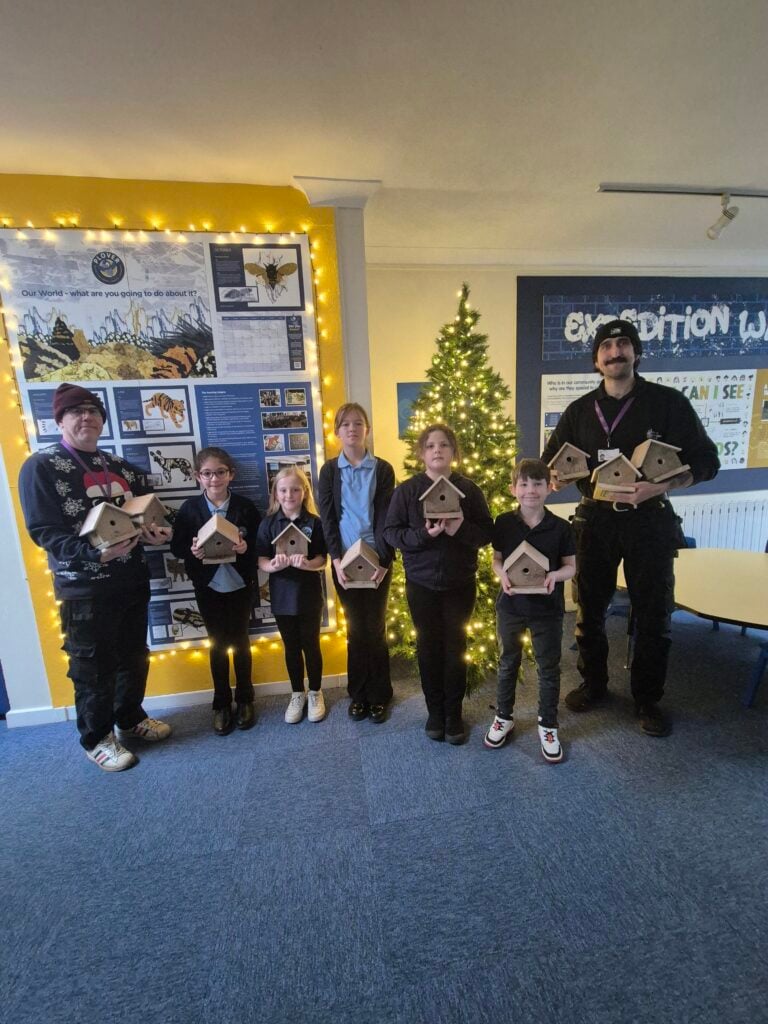
With the help of Expert Dave Hull, the students created bird boxes which were gifted to various different members of the Plover Community – including over 20 to Sandall Beat Wood to be installed as part of a nature trail showing real agency in protecting our planet.
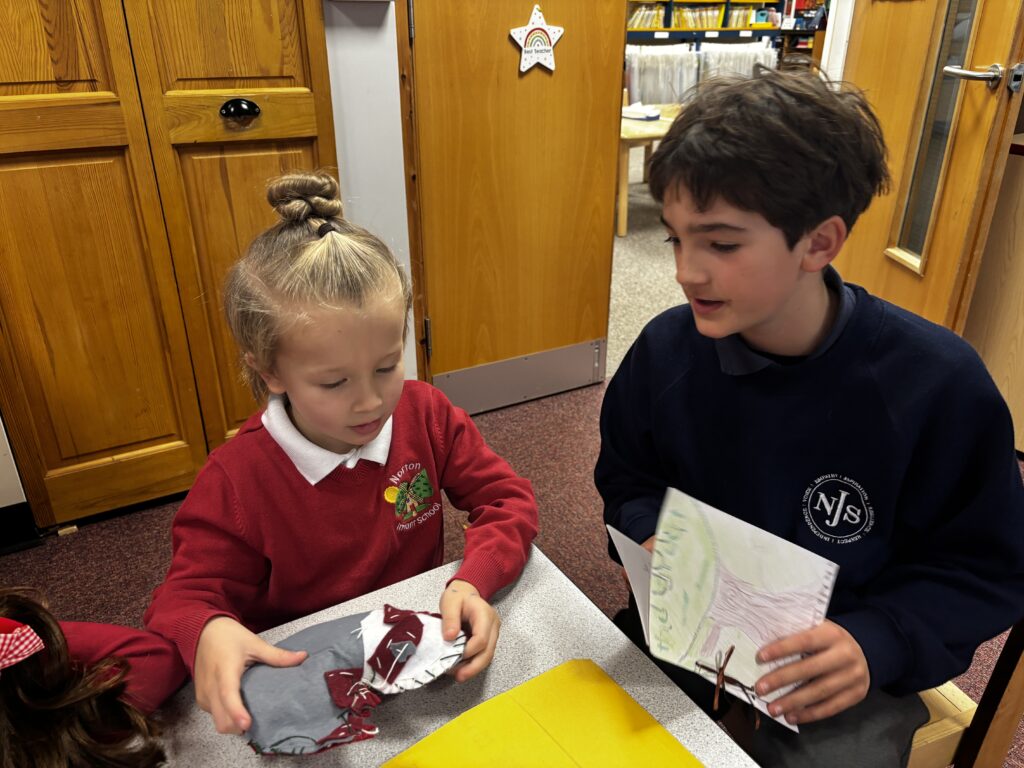
Students at Norton engaged in a similar expedition answering the same Guiding Question but creating a different product. The Year 5 and 6 pupils created a felt soft toy of an animal that lives in the Amazon. This accompanied story books based on The Kapok Tree to teach Year 2 children about deforestation. After reading their stories to the Year 2 children alongside their toy, they sold the toys and donated the money to a local donkey sanctuary https://www.wonkey-donkey.co.uk/
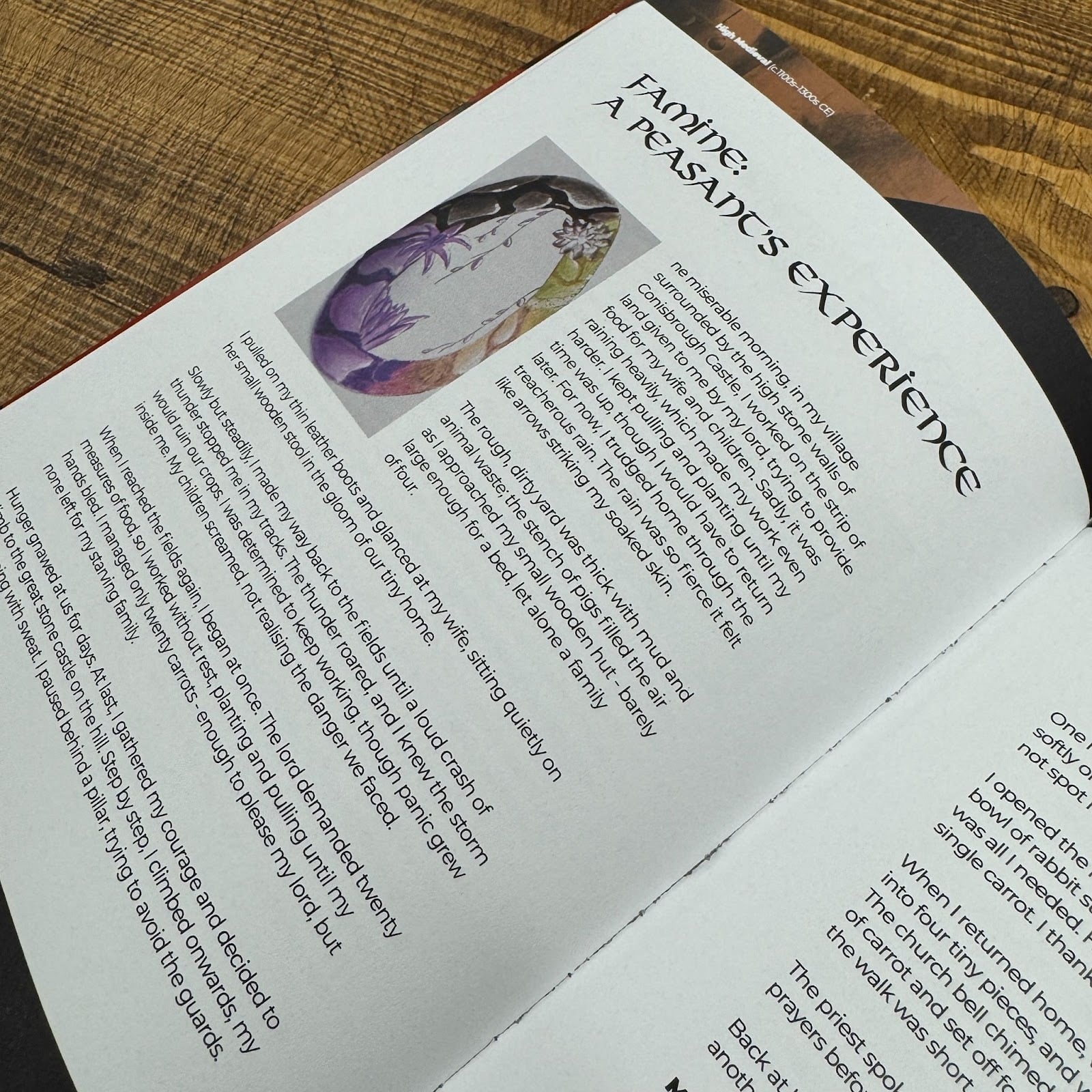
Diversity and Belonging Products Year 7 XP Doncaster and XP Gateshead: This Land is our Land
At XP Doncaster and XP Gateshead students in Year 7 studied an multidisciplinary expedition including Humanities, STEAM and Arts called ‘This Land is Our Land’ with the students answering the Guiding Question, ‘What’s the story of our community?’
Students in both schools studied History from across four periods: Medieval (1250 – 1500); Early Modern (1500 – 1750); Industrial (1750 – 1900) and Modern / 20th Century (1900 – 2000) and they were able to demonstrate a secure and expansive understanding of historical events, both local and national, by placing them onto a timeline across the four different periods. In Art they crafted illuminated letters and in Science students related their studies to scientific discoveries aligned to the historical periods above.
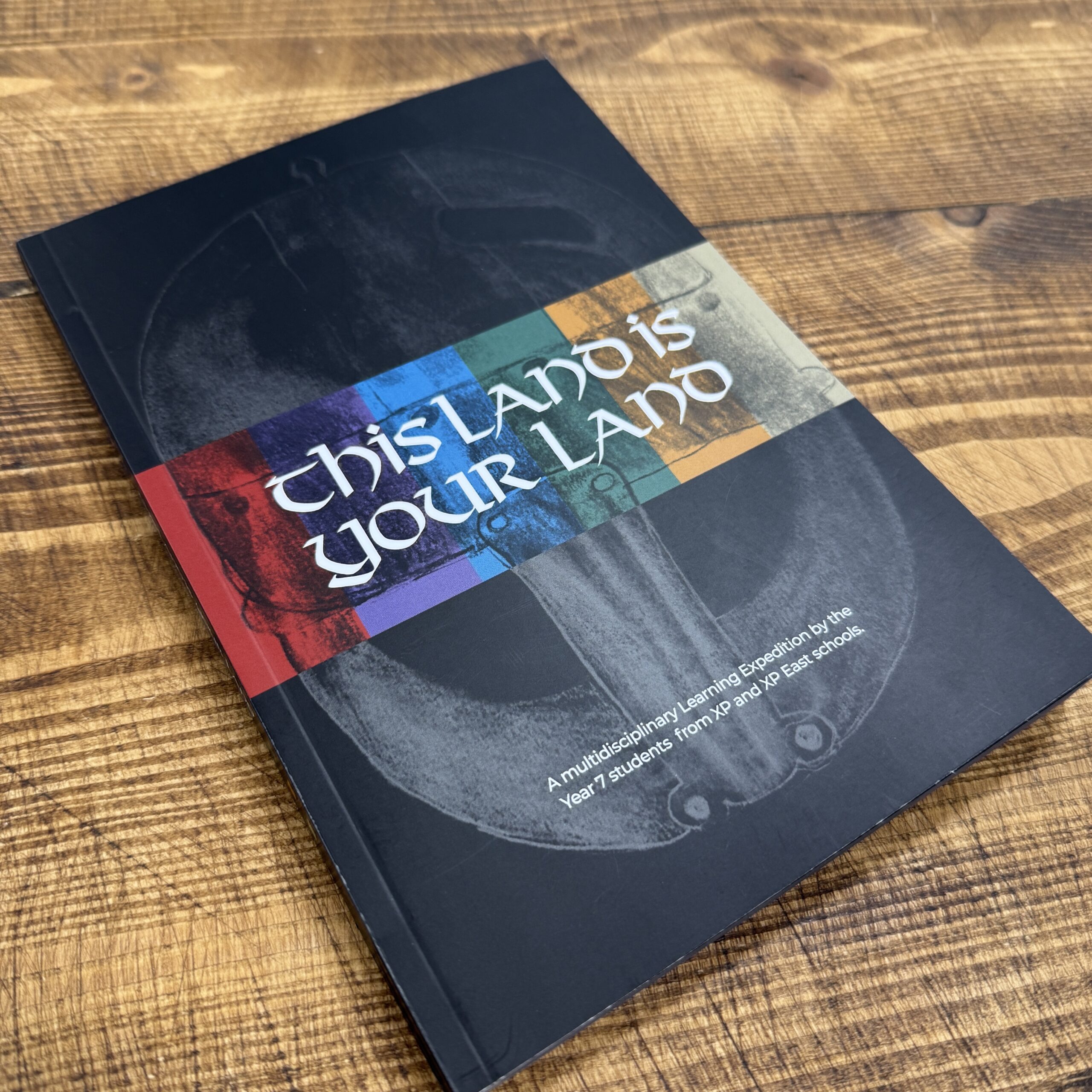
As a result of this XP Doncaster and XP Gateshead students have each compiled a book that was shared in Doncaster with parents before Christmas and will be part of XP Gateshead’s final Presentation of Learning at the Seven Stories – The National Centre for Children’s Books in Newcastle next year.
Diversity and Belonging Year 3 and 4 Carcroft: Coming to Doncaster
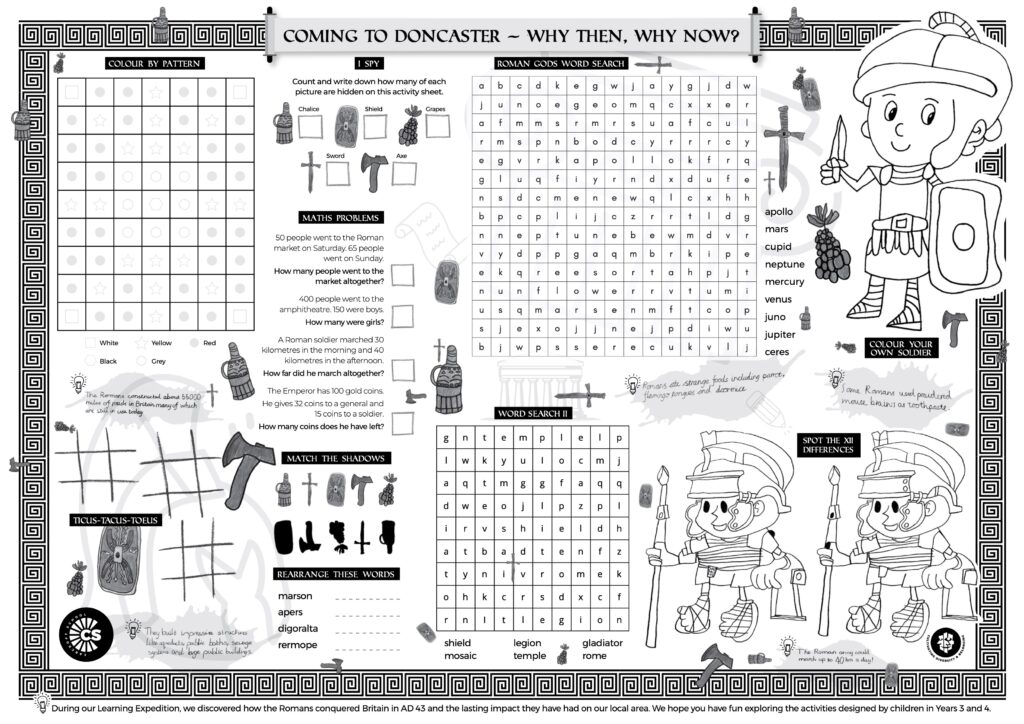
Students at Carcroft worked hard to answer the guiding question: ‘Coming to Doncaster, why then and why now?’
Throughout this Learning Expedition, students explored how the Romans came to conquer Britain and examined the lasting impact of Roman life on the local area. Through careful research, fieldwork and discussion, they considered why Doncaster was an important place then – and what traces of that history still shape the town today.
As part of their beautiful work, students designed and created an interactive activity sheet that supports other children to learn about Roman Britain. This resource now lives at Murton Park, where students visited during Hook Week to immerse themselves in hands-on fieldwork. Knowing that their work would be used by a real audience gave the learning purpose and pride, helping students see how their thinking and creativity can make a meaningful contribution beyond the classroom.
Diversity and Belonging: Year 1 and 2 at Green Top and Norton Infants – Not All Heroes Wear Capes
Across our Trust, Key Stage 1 pupils explored the guiding question: “How will I be a superhero in my community?” Through their Autumn Learning Expedition, Not All Heroes Wear Capes, children learned that real heroes aren’t found in comic books, but in everyday acts of kindness and service in Thorne.
Across the Learning Expedition, pupils developed their understanding of activism, diversity and significant figures from history, from the Great Fire of London to the work of Martin Luther King Jr. Through visits to local places and opportunities to serve others, they built a clear sense of what it means to stand up for their community.
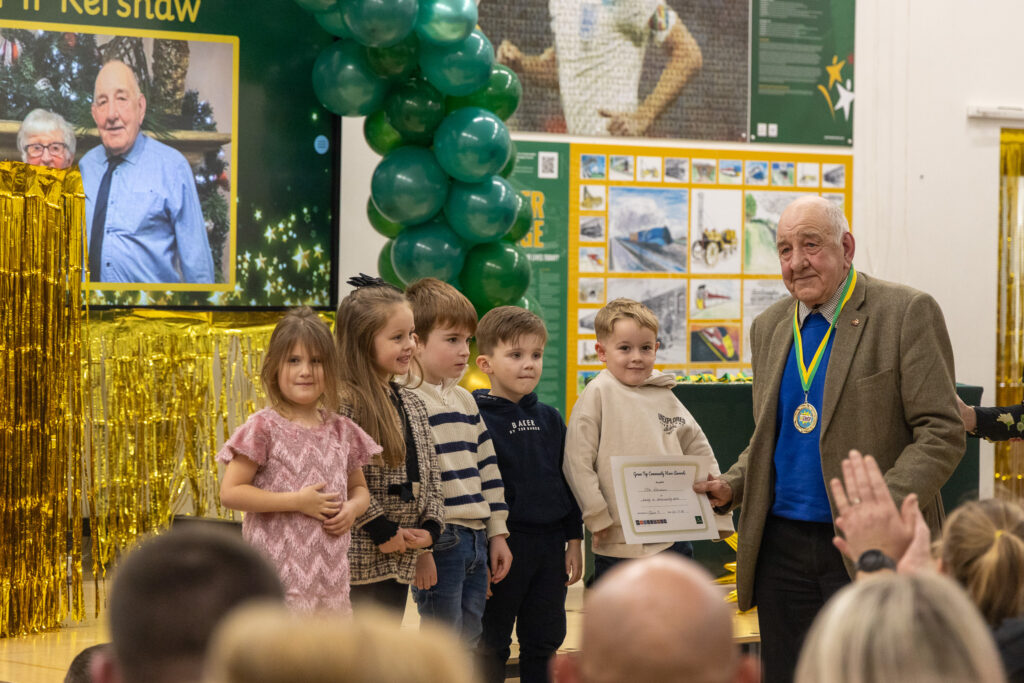
At Green Top, to share this learning with an authentic audience, pupils hosted the Pride of Thorne celebration – a child-led event recognising local heroes who make a difference every day. Children nominated individuals and groups including Casson Court, Lee Pitcher MP, author Phil Sheppard and local environmental volunteer Mr Kershaw. They created certificates, medals and nomination videos to explain why their heroes mattered, showing that even small actions can have a big impact – and that our children are learning to get smart to do good in the world.
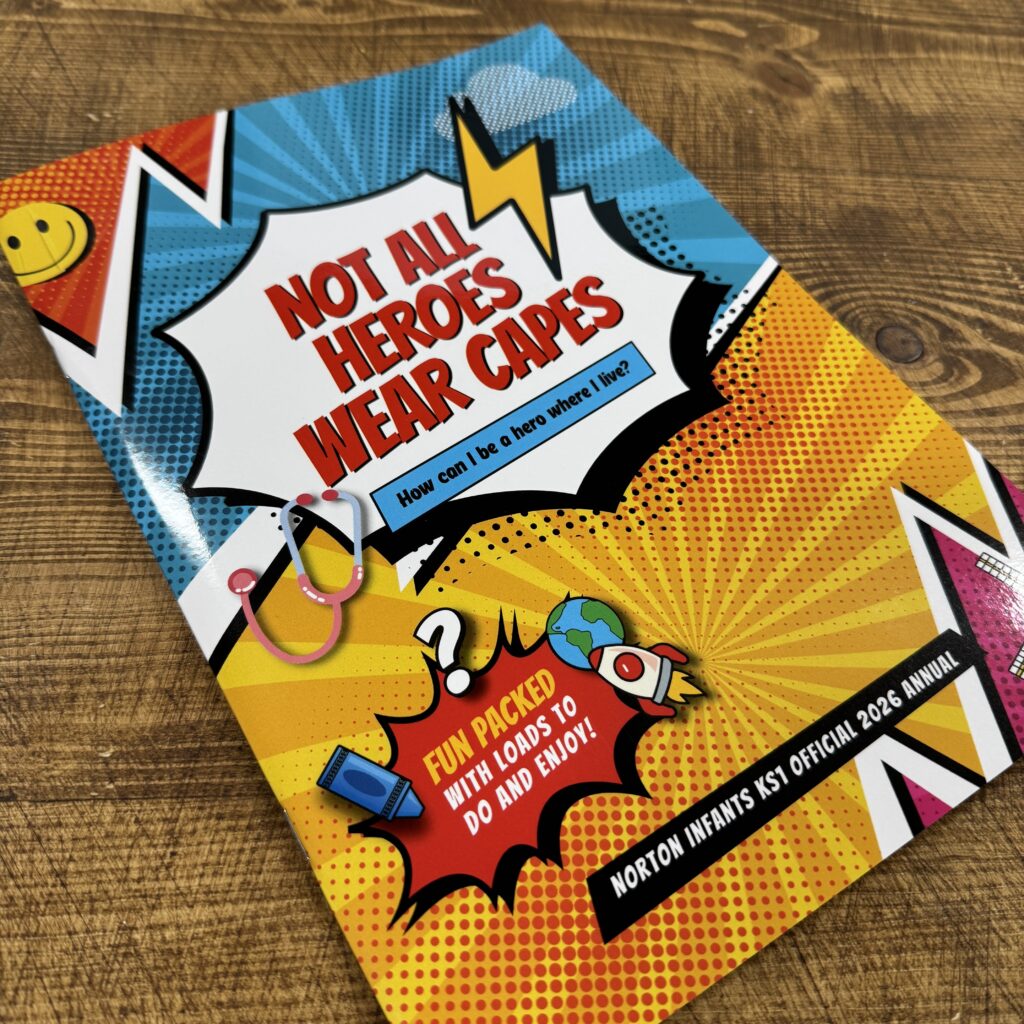
Whilst pupils at Norton Infants also took part in the same Learning Expedition, producing beautiful work that brought their learning to life in a powerful and movingly authentic way.
Their Presentation of Learning took the form of a museum-style gallery walk, thoughtfully curated by the children. The exhibition showcased students’ artwork and written work, photographs of experts and key moments from the expedition, pop-art placards used during a student-led protest march, and personal reflections and pledges from the students themselves.
As a final product, pupils created a high-quality, printed, annual-style book filled with photographs, student work, puzzles, reflections, character trait spotlights and personal pledges.
I am grateful for every day that I work as part of XP Trust. I am constantly humbled and incredulous at the quality of character and the quality of work produced by our young people. In the new year the first edition of the new XP Unpacked magazine will be released sharing stories from our Trust but also the impact that the work we do everyday is having across the world.
With this in mind, I would like to thank everyone associated with our Trust for the relentless work you do to help the young people in our care become the best versions of themselves.
Have a peaceful and restful Christmas and let’s go again in 2026.
At XP Gateshead, we believe that every child can achieve extraordinary things – and every adult in the building plays a part in making that happen.
We’re looking for a Pastoral Lead and a Learning Coach. We need people who are passionate about helping young people thrive. Someone who brings positivity and the belief that relationships are the foundation of great learning.
If you want to make a real difference, work in a strong and supportive team, and be part of a school that values kindness, collaboration and creativity – this is the place for you.
If you’re looking for a role where your organisational skills and dedication can make a real difference, XP Trust is the place for you – find out more here and apply!
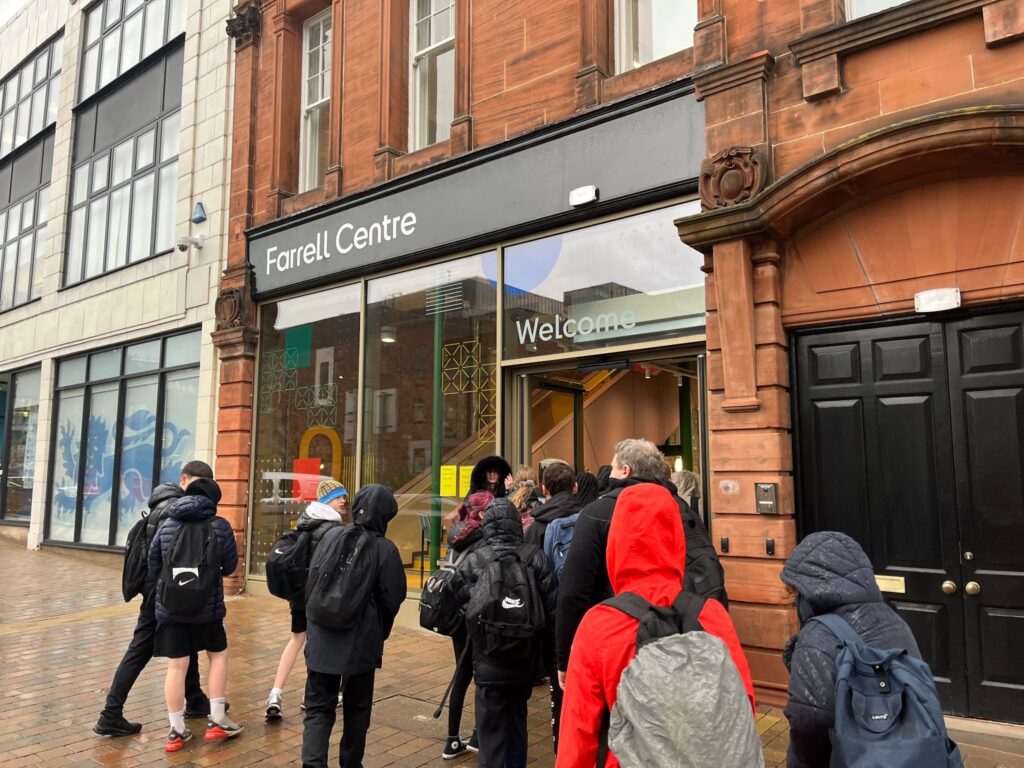
This week I visited XP Gateshead and had the privilege of supporting Year 9 students who hosted the Presentation of Learning (PoL) for their latest Learning Expedition entitled, ‘Another Brick in the Wall’ at the Farrell Centre at Newcastle University.
Year 9 students from XPG entering the Farrell Centre at Newcastle University, the venue for their latest Presentation of Learning(PoL)
The Farrell Centre have been a great supporter and friend of XP Gateshead since we opened and we have worked with them a number of times now to support our Learning Expeditions. The centre opens up and reveals to students the importance of architecture and urban design and how this has such a significant impact on well being, aspirations, eco-systems and beauty in our communities. We were split into two groups and as one headed out on an aspirational tour of the university the other group settled into a workshop led by staff at the centre.
At the start of the day, we were split into two groups and as one headed out on an aspirational tour of the university the other group settled into a workshop led by staff at the centre. The workshop was centred around a national initiative called ‘Urban Flourishing’ a project that encourages and inspires all sections of the community to come together and share ideas about how we can make our communities better places to live, work and thrive.
Check out the Urban Flourishing Project and how you can have your say about the shape of your community.
The workshop was a fitting finale for our students who had been engaged in a Learning Expedition, ‘Another Brick in the Wall’ that had focused on the importance of structures in both Humanities and Science and how design and planning impacts significantly on the quality of life. Students had studied structures from a variety of perspectives and had used this knowledge to answer the Guiding Question, ‘How are structures important in explaining our world?’ This had led our students consolidating their learning by creating a proposal for a new housing development set to replace the old Sir Godfrey Thomson Court, which was demolished earlier this year. Students engaged with developers, councillors, and the local MP to gather their insights on social housing in the area and shared their vision for its future in a report submitted to develops and planners.
“how cool is it to have had a Dad who designed James Bond’s workplace?!?“
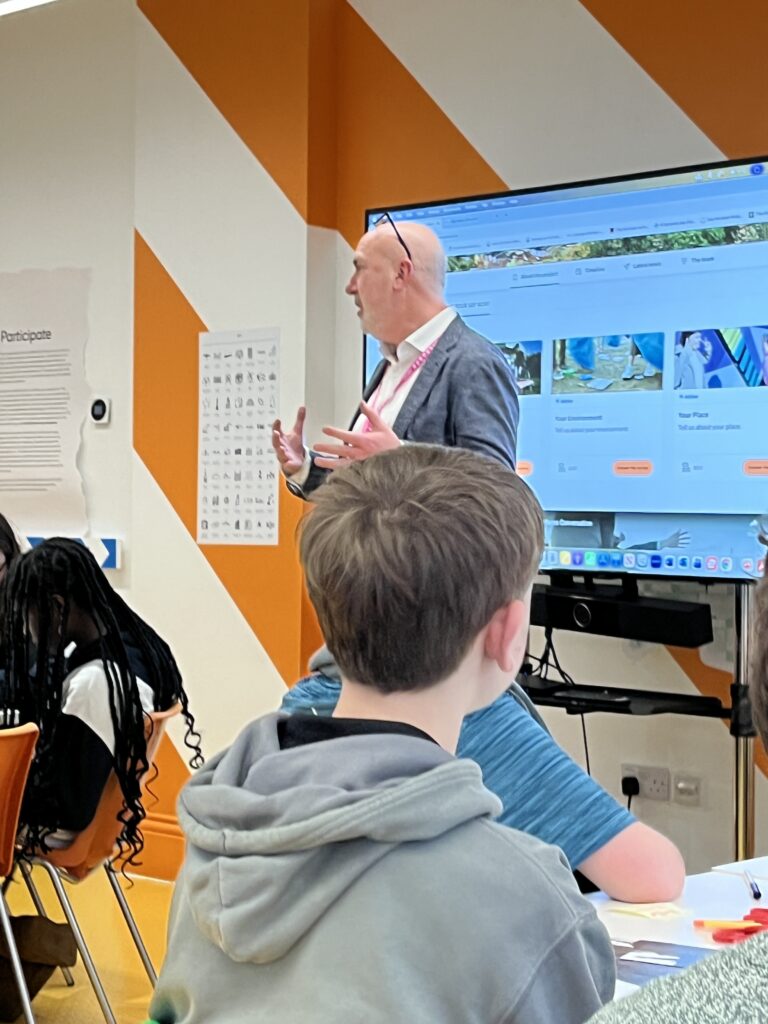
Max Farrell introduced the session and highlighted the importance of value-driven urban design and planning
“It was a chance for students to use their imagination and voice and lived experience to shape thinking about design and planning in their area.“
We were welcomed by Max Farrell, the son of the founder of the centre, Sir Terry Farrell the world renowned architect, who spoke about his own passion for urban design and how it is imperative that we are all part of shaping our communities by using our voice. His stories about his childhood were lively and inspirational, particularly the one about how it was that his Dad had designed the MI6 building in London – how cool is it to have had a Dad who designed James Bond’s workplace?!?
Max also introduced our students to the ‘Urban Flourishing’ project and the workshop activities that would allow the students to identify what they enjoyed about their community but also the things they would like to change to enhance where they lived. It was a chance for students to use their imagination, voice and lived experience to shape thinking about design and planning in their area.
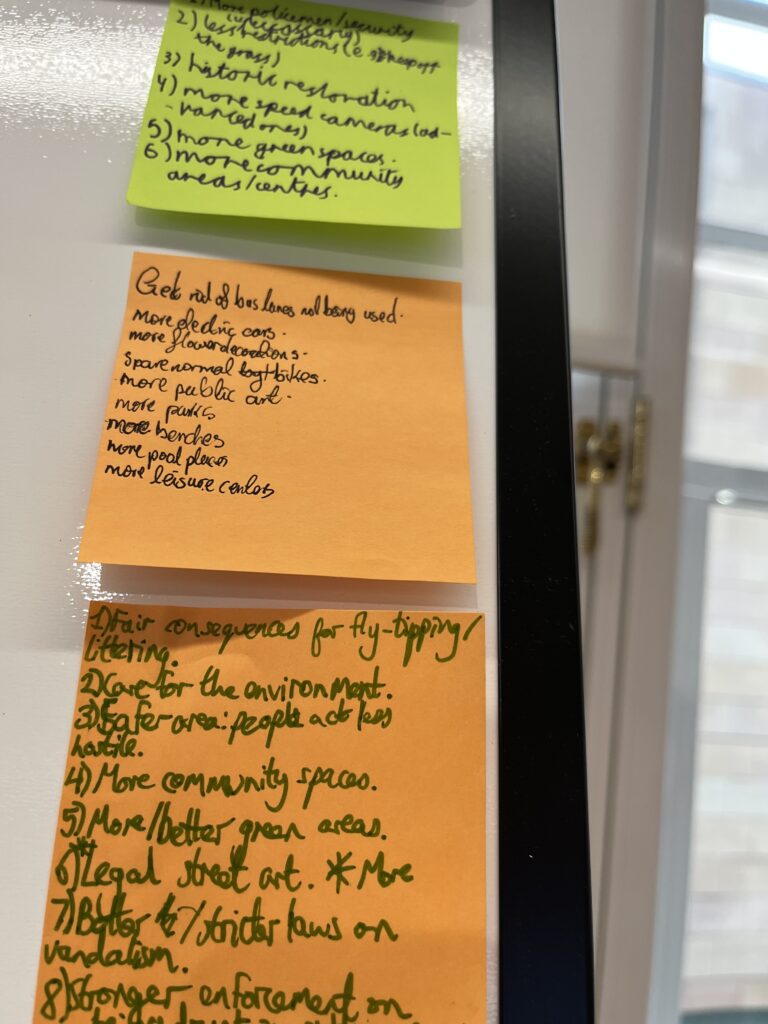
Olly, from the team, led the first practical session which was based around the activity called ‘Crazy Eight.’ In short, students, in pairs, had to write down eight ideas in eight minutes that would improve the place they lived and be ready to feedback their ideas to the rest of the group. Students engaged fully in this activity and came up with some really perceptive and discerning ideas, ranging from better lighting to address the well being of more vulnerable groups like the elderly (my grandad doesn’t like going out at night due to poor lighting) to simple but effective ideas to improve the environment in their area.
XPG Y9 students’ ideas for improving their local area – simple, achievable and highly effective.
“Students engaged fully in this activity and came up with some really perceptive and discerning ideas…”
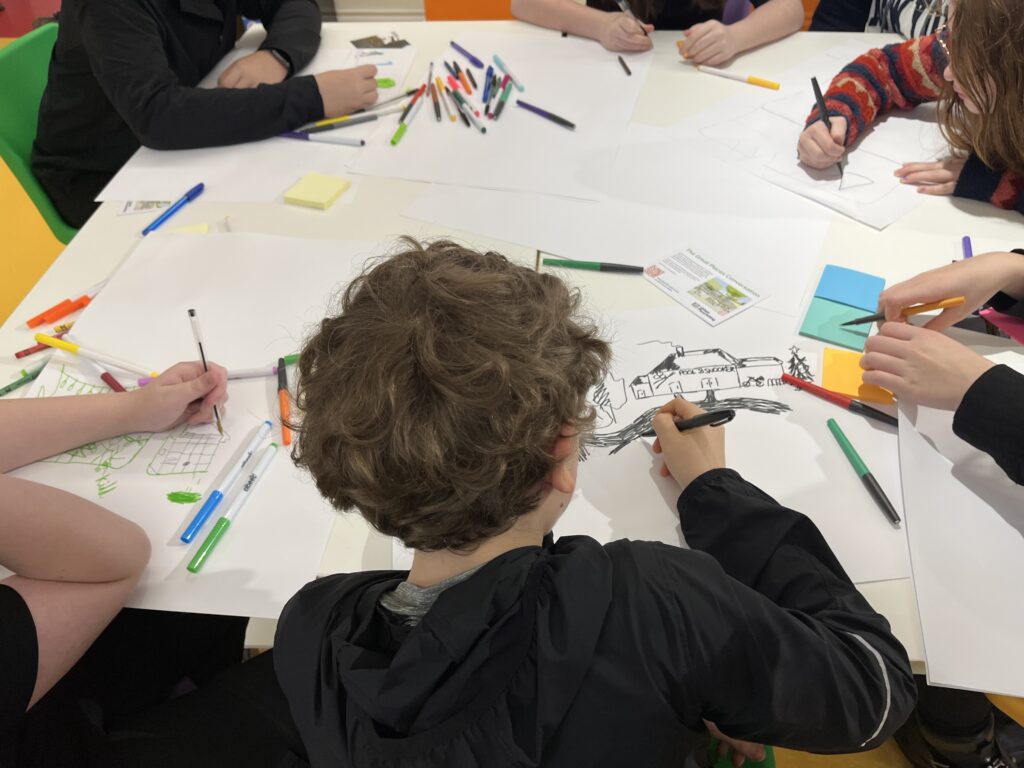
Students were then tasked to visually represent what their locale looked like currently and how based on the ideas they had shared they would reimagine it. through drawing images represented what their locale looked like now and how they would reimagine it to make it better.
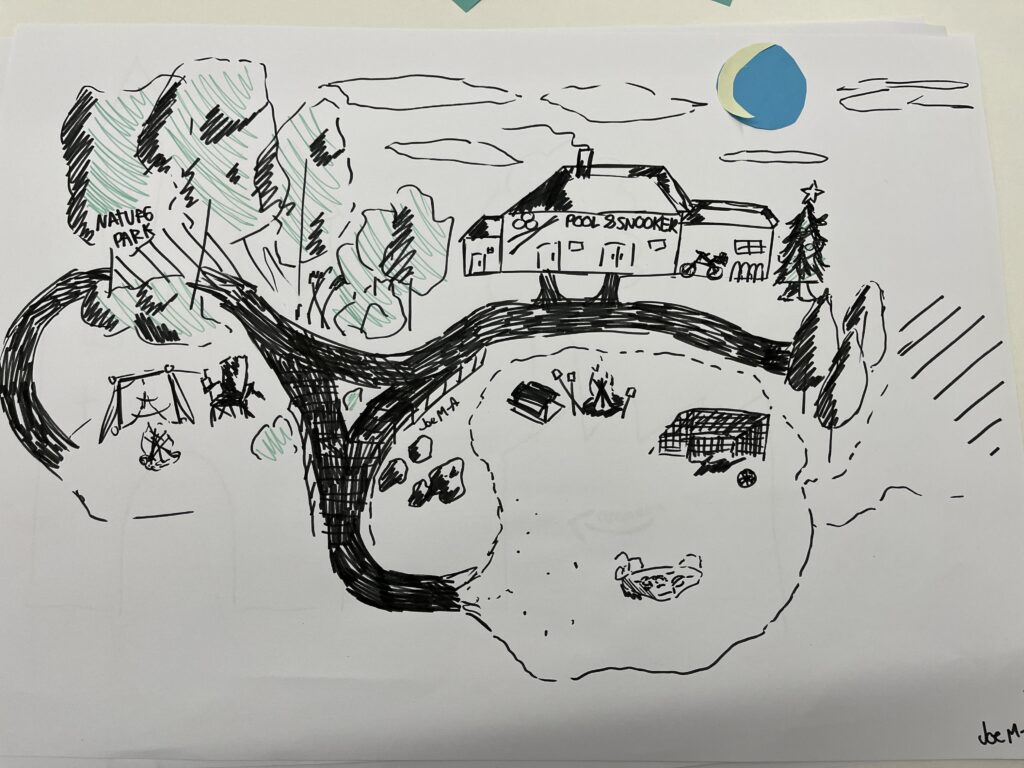
Students had great fun using their ideas from the previous activity to create a vision of a better designed future for their community. One of the things that struck me most was that almost every group wanted to have access to more safe, green spaces that were purposeful and allowed communities to cultivate and protect eco-systems and habitats in their areas. Students shared their images and talked through their ideas with good humour and integrity. Joe’s work (see below) particularly caught the eye, showing a real flair for urban design – hopefully a work placement awaits next year!
Joe’s sketch (he completed this in ten minutes!!) reimagining his local area.
Max brought the first workshop to a close and as students returned from their tour the group’s swapped over. After each group had enjoyed a tour and the workshop experience they started to prepare for their Presentation of Learning (PoL) at the centre. Students set up their stalls and practised their presentations to each other, staff and the team from the Farrell Centre. Students had produced work that covered each Case Study of the expedition and they talked eloquently and with authority about the Cold War and the impact of the fall of the Berlin Wall, a study of China, the importance of the periodic table and the impact of the breakdown of structures in the novel, Lord of the Flies by William Golding.
“Students acted as ambassadors, on their own initiative, welcoming parents and directing them to their seats.“
Parents began to arrive and filled the centre. Students acted as ambassadors, on their own initiative, welcoming parents and directing them to their seats. Martin Said from XP Gateshead opened the PoL, explaining the format of the evening and framed the experience to come. In addition, Max Farrell addressed parents and commented on the quality of the work by students at XPG. Parents then engaged with student presentations and completed an ‘Exit Ticket’ to show their engagement and learning.
It was a highly purposeful and successful evening.
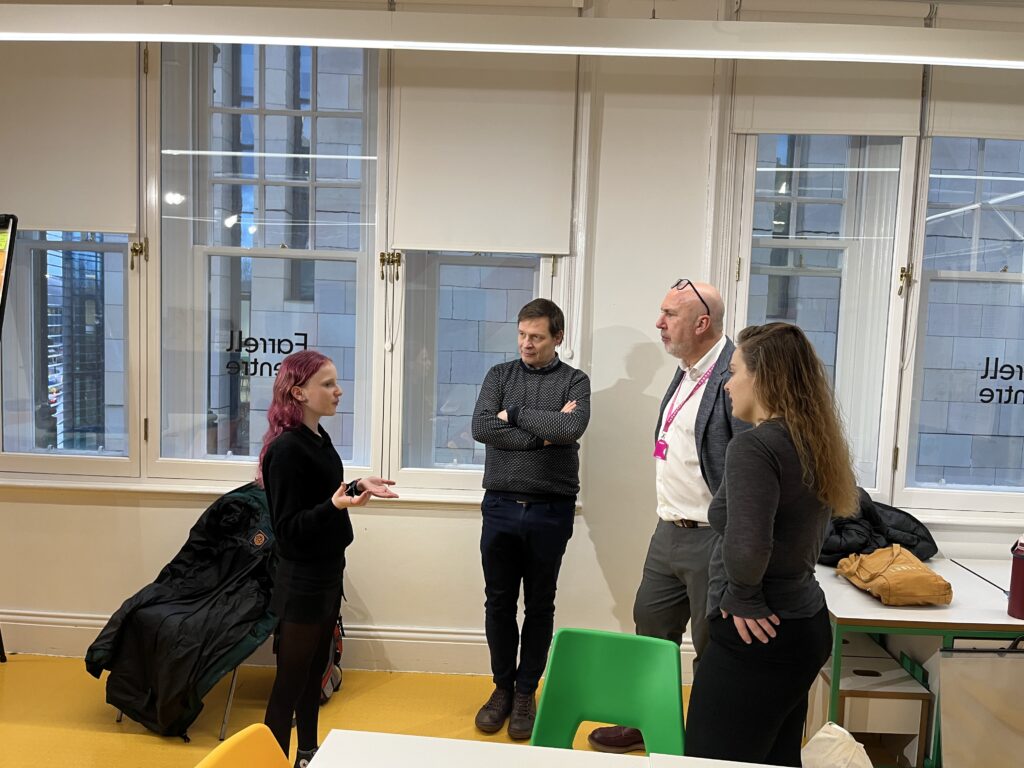
Y9 student Lena explains the nature, purpose and impact of ‘Another Brick in the Wall’ and our Expeditionary Learning model to Max Farrell and colleagues.
In conclusion, what resonated with me about this experience was that by locating the Presentation of Learning in an external venue this gave increased opportunities for students to show and articulate the skills and knowledge they had acquired, over the course of this Learning Expedition, to both parents and also external partners and experts. This not only reinforces and deepens learning but it enables students to authentically develop their confidence and character. The image of Lena above represents this perfectly: a Year 9 student holding the attention and interest of experts in architectural and urban design articulating her learning and understanding and how this has been enhanced by engaging in a purposeful cross-discipline Learning Expedition.
“I was humbled and filled with pride at our students expressing who they are through the beautiful work they produce…”
I would like to thank the Year 9 Team at XPG, and the Expedition Lead Rebecca Jones, for inviting me to be part of this experience. Once again, I was humbled and filled with pride at our students expressing who they are through the beautiful work they produce and the agency they acquire when given the opportunity to enact positive social change.
Another powerful experience and memorable experience.
Andy Sprakes, Chief Academic Officer, XP Trust
N.B. If you want to take part in the Urban Flourishing Great Places Conversation visit the site here and use your voice!
Children from Plover School, part of XP Trust, have helped bring colour, pride and community spirit to Doncaster Royal Infirmary as construction continues on the hospital’s new Department of Critical Care.
As part of a community art project, pupils were invited by Doncaster and Bassetlaw Teaching Hospitals (DBTH) to design artwork for the long stretch of hoardings surrounding the building site – a space passed daily by staff, patients and families. The challenge was simple but meaningful: create something that would lift spirits and bring positivity to those visiting or working at the hospital.
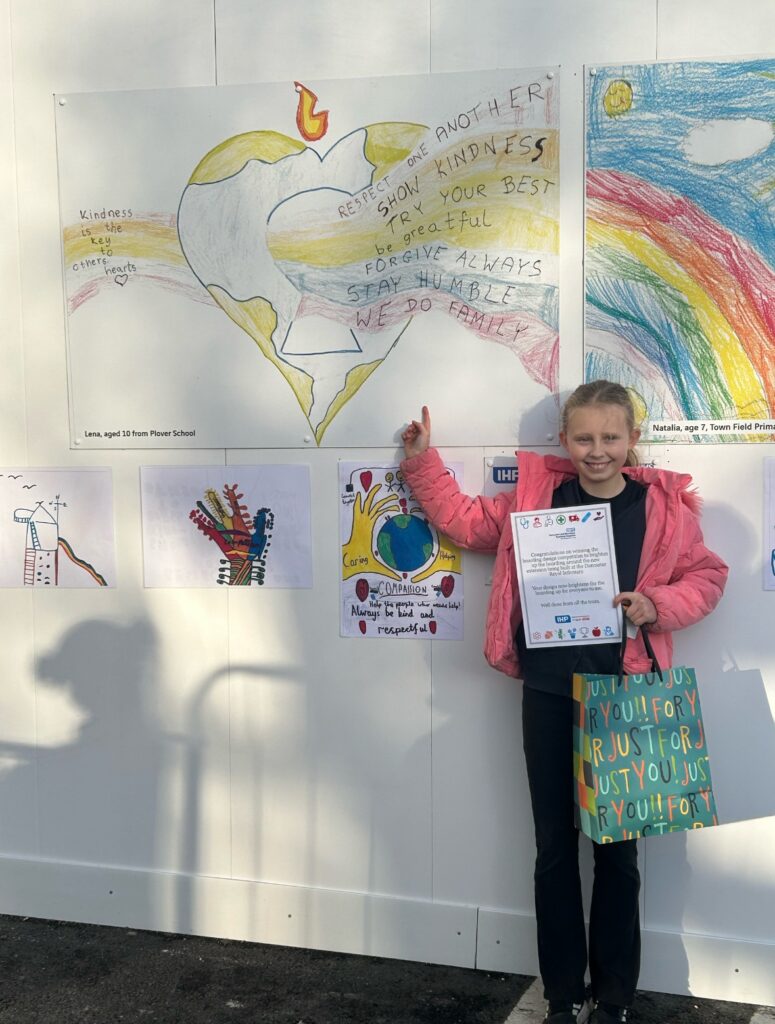
Pupils from Plover and Town Field Primary School submitted the winning designs – the piece from Plover was created by Lena in Year 5. Her vibrant and hopeful artwork now appears proudly at the South Block entrance, offering a warm welcome to visitors and hospital staff.
To celebrate the achievement, Lena and her classmates visited the hospital for the official unveiling. They received certificates and met members of DBTH’s Capital Planning Team and partners at VINCI Building, who thanked the children for the impact their creativity will have on the space. For our pupils, seeing their artwork displayed publicly was a powerful moment of pride and purpose – an authentic audience that sits at the heart of XP learning.
Making a difference close to home
This collaboration reflects what XP Trust believes learning should be: purposeful, beautiful and rooted in community contribution. Projects like this help children understand that their ideas and their work can make a genuine difference to the world around them.
Headteacher quote – Jayne Ogle
“At XP we teach our children that beautiful work isn’t just about creativity – it’s about compassion. Lena’s artwork will brighten the day for patients, staff and families at DRI, and we are incredibly proud of the way our pupils use their learning to serve their community. This project shows them that what they do matters, now and in the future.”
About the opportunity
The new Department of Critical Care is currently being built at Doncaster Royal Infirmary, and while the construction continues, XP pupils are helping to bring colour and hope to the area through their artwork.