This website uses cookies to ensure you get the best experience on our website.

Learn more
Got it!
XP Trust Logo
  • About us
    • Who are XP Trust?
    • Values & Ethos
    • How we XP
      • Our Design Principles
      • Our Core Practices
      • What is Crew?
      • Our Character Traits
      • Our Habits of Work and Learning (HoWLs)
      • What is a Learning Expedition?
      • Our Curriculum Seams
      • Our Narrative for Success
      • What is 3D Learning?
      • How We XP – The Book
      • See how we XP
      • XP University
    • Visit XP Trust
      • Arrange a delegate visit
      • Visitor book
    • Find your child’s place at XP Trust
    • Admissions Process
    • Governance
    • Statutory policies and website information
    • Calendars
    • Upcoming Events
    • Contact Us
    • Careers
  • Our Schools
    • Primary
      • Green Top
      • Carcroft
      • Plover School
      • Norton Infants
      • Norton Juniors
    • Secondary
      • XP
      • XP East
      • XP Gateshead
  • Working at XP
    • Join Our Crew
    • Current vacancies
    • How to apply
    • Register your interest
  • Our Stories
    • Current Expeditions
    • Elevating Beautiful Work
    • Media coverage
    • XP. Alumni
    • Beautiful work this week
    • Models of Excellence
    • Comms Crew
    • Partnership development
    • XP Live – Festival of Arts and Culture 2025/26
    • XP Trust Shop
    • Welcome to XPUnpacked
    • Jeff Tech High
    • How We XP – Video Collection
  • Staff HQ
    • Staff Wellbeing
    • Safeguarding
    • Staff Handbook Policies
    • How do I…
      • Log An Incident
      • Order Resources
      • Claim Expenses
      • Claim Additional Hours
      • Report My Absence
      • Log an IT issue
      • Log a repair/request
      • Administer First Aid
      • Degunge/Stewardship
      • Staff Voice
      • Order a replacement ID card
      • Book a Trust minibus
    • Help with…
      • Impactivity
      • SMAPS
      • SOS
XP Trust Logo
  • About us
    • Who are XP Trust?
    • Values & Ethos
    • How we XP
      • Our Design Principles
      • Our Core Practices
      • What is Crew?
      • Our Character Traits
      • Our Habits of Work and Learning (HoWLs)
      • What is a Learning Expedition?
      • Our Curriculum Seams
      • Our Narrative for Success
      • What is 3D Learning?
      • How We XP – The Book
      • See how we XP
      • XP University
    • Visit XP Trust
      • Arrange a delegate visit
      • Visitor book
    • Find your child’s place at XP Trust
    • Admissions Process
    • Governance
    • Statutory policies and website information
    • Calendars
    • Upcoming Events
    • Contact Us
    • Careers
  • Our Schools
    • Primary
      • Green Top
      • Carcroft
      • Plover School
      • Norton Infants
      • Norton Juniors
    • Secondary
      • XP
      • XP East
      • XP Gateshead
  • Working at XP
    • Join Our Crew
    • Current vacancies
    • How to apply
    • Register your interest
  • Our Stories
    • Current Expeditions
    • Elevating Beautiful Work
    • Media coverage
    • XP. Alumni
    • Beautiful work this week
    • Models of Excellence
    • Comms Crew
    • Partnership development
    • XP Live – Festival of Arts and Culture 2025/26
    • XP Trust Shop
    • Welcome to XPUnpacked
    • Jeff Tech High
    • How We XP – Video Collection
  • Staff HQ
    • Staff Wellbeing
    • Safeguarding
    • Staff Handbook Policies
    • How do I…
      • Log An Incident
      • Order Resources
      • Claim Expenses
      • Claim Additional Hours
      • Report My Absence
      • Log an IT issue
      • Log a repair/request
      • Administer First Aid
      • Degunge/Stewardship
      • Staff Voice
      • Order a replacement ID card
      • Book a Trust minibus
    • Help with…
      • Impactivity
      • SMAPS
      • SOS
XP Trust Logo
  • About us
    • Who are XP Trust?
    • Values & Ethos
    • How we XP
      • Our Design Principles
      • Our Core Practices
      • What is Crew?
      • Our Character Traits
      • Our Habits of Work and Learning (HoWLs)
      • What is a Learning Expedition?
      • Our Curriculum Seams
      • Our Narrative for Success
      • What is 3D Learning?
      • How We XP – The Book
      • See how we XP
      • XP University
    • Visit XP Trust
      • Arrange a delegate visit
      • Visitor book
    • Find your child’s place at XP Trust
    • Admissions Process
    • Governance
    • Statutory policies and website information
    • Calendars
    • Upcoming Events
    • Contact Us
    • Careers
  • Our Schools
    • Primary
      • Green Top
      • Carcroft
      • Plover School
      • Norton Infants
      • Norton Juniors
    • Secondary
      • XP
      • XP East
      • XP Gateshead
  • Working at XP
    • Join Our Crew
    • Current vacancies
    • How to apply
    • Register your interest
  • Our Stories
    • Current Expeditions
    • Elevating Beautiful Work
    • Media coverage
    • XP. Alumni
    • Beautiful work this week
    • Models of Excellence
    • Comms Crew
    • Partnership development
    • XP Live – Festival of Arts and Culture 2025/26
    • XP Trust Shop
    • Welcome to XPUnpacked
    • Jeff Tech High
    • How We XP – Video Collection
  • Staff HQ
    • Staff Wellbeing
    • Safeguarding
    • Staff Handbook Policies
    • How do I…
      • Log An Incident
      • Order Resources
      • Claim Expenses
      • Claim Additional Hours
      • Report My Absence
      • Log an IT issue
      • Log a repair/request
      • Administer First Aid
      • Degunge/Stewardship
      • Staff Voice
      • Order a replacement ID card
      • Book a Trust minibus
    • Help with…
      • Impactivity
      • SMAPS
      • SOS
  • Welcome to XP Trust.

How We XP

Book your visit to XP

Apply for your child to attend an XP School

Working at XP

What is Crew?

What is a Learning Expedition?

Our Beautiful Work

Visit the XPT Store

We’re looking for Cleaners across XP Trust

Author Profile
12 February 2026

Geoff Hewitt

We’ve got vacancies for cleaners across our Trust – visit xptrust.org/vacancies to find out more and #JoinOurCrew

Front Page News

We’re looking for a SEND Learning Coach at Green Top!

Author Profile
12 February 2026

Geoff Hewitt

Find out more and apply here to #JoinOurCrew: https://xptrust.org/green-top-send-learning-coach/

Front Page News

Teaching Self Regulation and Metacognition to year 11.

Author Profile
11 February 2026

Darren Mead

It’s the penultimate day of half term and I have just asked my Year 11 crew, “How has the first week back helped you this half term?” A week in which students undertook a mini-expedition, “We Are G28,” with the question: How can we nurture the best version of our future selves? They completed a high ropes course, a cooking challenge, a session on learning and self-regulation, and an academic challenge. Their responses were telling: “I am just more aware of what I need to do and how it’s going;” “I am better at just getting things done—not because I am more motivated—I just know it needs to be done and I get it done;” and, “I am more organised, and that helps me keep on top of my extended study and get a chance to revise.”

All of which points to an increasing ability to self-regulate. No one is claiming that this week developed this; students learn this as they mature, and our expeditionary  curriculum has many (amazing) experiences for students to grow and develop these skills. However, this week did have a significant taught element that seems to have crystallized many students’ capacity for self-regulation.

So, what did we do?

In the case study, “How can I become a more independent learner?” We learned that becoming an independent learner is not just about doing work alone; it’s about taking ownership of our education by consciously thinking about how we learn and actively seeking ways to improve. This activity laid the foundation for the entire expedition, helping us understand the core principles behind effective learning.

We introduced the term “self-regulated learner” and began with a self-assessment questionnaire where we scored ourselves to gauge our current learning habits. It was a great way to honestly look at our strengths and areas for improvement. We explored what such a learner might know, do, and be like, and how they might think. We learned that a self-regulated learner “monitors, directs, and regulates actions toward goals of learning new information, expanding expertise, and self-improvement.”

Introducing a model of Self Regulation.

We used Pintrich’s model of Self-Regulation to break this down into “cognition”—the mental process of acquiring knowledge—and “metacognition,” which is being aware of our own thinking and learning to make better decisions, and “motivation”—a blend of our feelings of self-efficacy and resilience, our view of learning, and how we set and use goals. Asking a simple question of “how would you feel if you had to teach a class of Japanese students how to make a cake in fluent Japanese?” revealed how we change our goals to make them more manageable and build confidence levels.

Important distinctions were made between “Knowledge about Cognition” and “Regulation about Cognition.” This provided students with a simple dichotomy between knowing how to learn and study, and how to make good decisions while studying, based on an understanding of planning, monitoring, and regulation. 

Making pledges.

This ultimately led us to making pledges to become better learners, not just for this week but for the year ahead. Students started by picking three statements from the questionnaire that we want to improve upon and creating a plan with short and long-term goals. This personalized approach empowers us to take concrete steps towards becoming more independent and effective learners.

Name: 
Goal 1: carefully consider whether the materials or methods im using are actually useful and if im just rehashing something i already know 
Plan: provide reason for why I’m doing what I’m doing and keep a list of what knowledge im confident in and what needs further consolidation 
Goal 2: ensure im understanding full concepts and not forgetting what ive previously learned
Plan: before starting a new activity or creating a new resource, write a summary paragraph of whatever the last thing i learned was 
Goal 3: decide which revision methods work best for me depending on the subject rather than just repetitively exhausting the same basic method
Plan: attempt to memorise the same knowledge from multiple different methods and resources and decide which works best (eg. put maths formulas into a mindmap, flashcards, a quiz and a list

These pledges and Pintrich’s model of self-regulation were the backbone of all other experiences and gave us common language and understanding to talk about how we operate as learners and how we might need to be to grow our capacities.

The power of Crew.

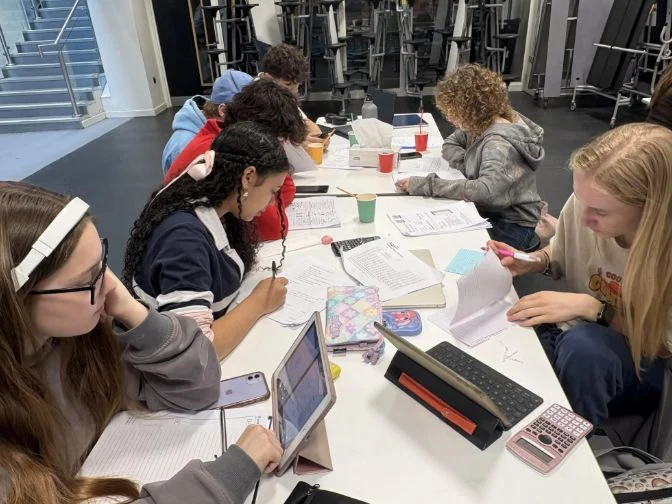
Our next case study asked, “Why is crew important to my resilience?” To do this, students needed to explore their comfort zone, and so we traveled to North Yorkshire for a high ropes course, where we navigated obstacles relying on our crew. My crew had a wide range of confidences and abilities, but regardless of this, every student experienced a moment where they thought they could not do something. Where the fear kicked in and any notion of a plan or strategy was simply alien. This was when the power of Crew took over. This taught us that resilience isn’t a solitary trait but a collective strength, and that a strong crew provides a vital support system for overcoming adversity. This experience reinforced the importance of our group bonds and built the resilience needed for future challenges.

The next case study asked, “What can cooking tell me about learning?” It was set as a small group challenge, using the “critical skills model” as a starting point. Groups planned, prepared, and cooked a two-course meal. This involved managing a budget, researching recipes, dividing tasks, and presenting a final dish with a menu card including costs and nutritional information. What the focus really was, was a way to explore the ideas we had learned about Self-regulated Learning, and the Planning, Monitoring, and Regulation part of “metacognition,” and a further reinforcement of our crew, as success requires clear communication and efficient teamwork.

The final case study was very much a culmination of the previous experiences and a chance to apply our newly made pledges. It asked the question: How can I improve my academic performance?

Again, using the critical skills approach to set a challenge, each student chose a difficult curriculum topic and worked to master it using new knowledge of self-regulated learning. Namely, setting manageable goals, considering strategy, learning strategy, and then monitoring and regulating our attention throughout. It culminated in each crew member presenting their progress to our crew, which showed us we were capable of performing at a high level, proving that we can overcome academic obstacles through effort and effective learning strategies. This activity linked theoretical skills to practical application, demonstrating the tangible benefits of a focused, self-regulated approach to studies.

Letter to My Future Self.

At the end of each day, debriefing sessions allowed us to reflect on what the activities taught us about nurturing our future selves, and this culminated in a “Letter to My Future Self.” This final task made the learning tangible, creating a time capsule of our growth to reflect upon in the future. Students wrote in confidence that this final task was personal. It could be shared if they wanted, but it was for them—a chance to be honest with themselves, engage in positive self-talk, and aspire to the best version of themselves.

Front Page News

Why Learning Expeditions Matter

Author Profile
9 February 2026

Andy Sprakes

Recently, I heard a story that made my heart soar. But before I reveal the moment this happened, let me give you a little context.

In the Autumn Term, on the 20 November, I was invited to attend an Awards Ceremony at Green Top School, organised by Key Stage One staff and children, to culminate their Learning Expedition entitled, ‘Not all heroes wear capes’. The pupils in Key Stage One had studied How can I be a hero in my community?

It was breathtaking to hear how children had engaged in a hook and immersion week by creating placards about litter, parking, or kindness, and acting as “true activists” in Thorne through chanting and litter picking. They visited local care homes to sing, took residents cards, and raised £50. They also worked with local MP Lee Pitcher and the local food bank on a Christmas shoe box appeal. It was clear that the Learning Expedition had been seeped in community activism – and these were kids between the ages of five and seven.

Case Studies in the Expedition focussed on the historical study of significant figures from the era of the Great Fire of London such as Christopher Wren and Samuel Pepys. They built and then burned box model houses to demonstrate how fire spreads easily as part of their Science studies. The pupils then moved onto a study of Martin Luther King using the text ‘Let the Children March’ to understand King’s impact on his community and the black community more widely. This case study involved making portraits and writing speeches.

Pupils from Key Stage One show pride in their written work linked to the theme of ‘diversity’.

Pupils then explored the concept of diversity using texts like The Ugly Duckling to learn about people from different backgrounds, religions and beliefs.

The crowning glory of the Expedition was the Pride of Thorne Awards ceremony where pupils had made short videos celebrating the recipients of the awards who were all recognised for their significant contribution to the community of Green Top and the wider community of Thorne. It was beautiful to see young children articulating why our guests, from a range of different walks of life, were receiving recognition because of the positive impact they had had on the fabric of the community by their selfless acts of service and kindness. The children also combined their skills, as part of the Expedition, to create professional certificates for this event as well as the medals for successful recipients which had been designed from the pupils’ artwork.

The stand out award for me, amongst all the very worthy winners, was the award to Mr Kershaw who lives near to the school and had been seen by pupils regularly taking care of the surrounding community by helping others and keeping the area tidy by picking up litter. This small act of kindness was noticed by pupils and they wanted to honour this ‘hero’ of the community.

Mr Kershaw receives his medal from Key Stage One students.

So this is enough to fill you with emotion but what really made me stop and think about the impact and importance of our work was when I visited the school recently and when talking to the pupils they told me they had seen Mr Kershaw recently.

They were eager to tell me that he was still carrying out acts of selfless service to the community, he was still helping others and he was still tidying up the local area…

But now, when carrying out his work for the community, there was something a little different about him. Now he was proudly wearing the medal that he had received from Green Top pupils.

Mr Kershaw, a hero that doesn’t wear a cape but who does wear a badge.

A very special badge: designed, crafted and warmly given by Green Top pupils who are activists in making their community a better and kinder place to live.

That is what made my heart soar.

Andy Sprakes, Chief Academic Officer, XP Trust

Activism, Elevating Beautiful Work, Expeditions, Front Page News, Greentop Front Page Post, Sharing Our Stories, Sharing Stories, Trust Blog

Norton pupils learn what it truly means to be a hero in their Doncaster community

Author Profile
6 February 2026

Geoff Hewitt

Children at Norton Infant School, part of XP Trust, have spent this term exploring a powerful idea: that heroism doesn’t belong to stories or films, but to the people who quietly care for others every day across Doncaster.

Through their Key Stage 1 project, Not All Heroes Wear Capes: How can I be a hero where I live?, pupils in Year 1 and 2 were challenged to look closely at their own community and to ask thoughtful questions about responsibility, kindness and service. The project was rooted in Doncaster itself, turning the town into a living classroom and giving children meaningful opportunities to learn from real people doing real work.

Throughout the project, pupils met Ros Jones, Mayor of Doncaster, who spoke with the children about leadership, decision-making and the importance of working for the common good. They also met Ed Miliband, who helped pupils understand how choices made locally and nationally can shape families, communities and the future of the environment.

Children developed a deeper understanding of civic life through conversations with David Milnes and Jackie Dudley, learning how care, tradition and responsibility play a role in making Doncaster a welcoming place for everyone.

Health and wellbeing formed an important strand of the learning. Pupils met Dr Steph Teanby-Clark, a local GP, who spoke about caring for people at every stage of life and the trust involved in supporting families and communities. This understanding was deepened through work with Starting Point, where children learned about homelessness in Doncaster and the compassion required to support people through difficult circumstances.

Moved by this learning, the children chose to take action themselves. After learning about food poverty, pupils worked closely with Askern CRY Foodbank, organising a march through Norton with carefully designed pop-art placards to raise awareness and collect donations. This act of service helped children connect their learning to real needs within their community.

The project also gave children space to explore courage, resilience and remembrance. Meeting local veteran Ben Parkinson helped pupils understand that heroism can involve strength, perseverance and sacrifice. Their learning was further enriched through work with the Victoria Cross Trust, which supported pupils to understand why remembering those who have served is an important responsibility shared across generations.

Creativity and academic rigour ran alongside this work. Children worked with local author and illustrator Phil Sheppard, developing their skills in storytelling and illustration while celebrating Doncaster’s people and places. Through writing, art and discussion, pupils learned to communicate their ideas with clarity, care and purpose.

Mia, a pupil in Year 1 said “I enjoyed meeting all the visitors who taught us how to help people  and be kind.”

The project culminated in a museum-style gallery and an ‘Annual’ book, shared with the local heroes who had supported the learning. Pupils also made personal pledges about how they would act as heroes in their own homes and neighbourhoods, recognising that small, thoughtful actions matter.

“This Learning Expedition showed our children that learning can make a real difference. By celebrating Doncaster’s everyday heroes, they learned to value kindness, service and responsibility – and to see themselves as capable of making positive change.” – Andrea Tunney, Headteacher.

At XP Trust, learning is designed to be academically rigorous, deeply human and rooted in place. For the children of Norton Infant School, this project helped them grow not only in knowledge and skill, but in empathy, confidence and a sense of belonging – learning that heroism starts close to home.

Front Page News, Global Sharing, Sharing Our Stories, Sharing Stories

Sharing our Stories: 06/02/2026

Author Profile
6 February 2026

Geoff Hewitt

Beautiful work this week

Here’s a selection of beautiful work from across the XP Trust!

To read about other stories from across the XP Trust, visit xptrust.org.

Top of the Blogs

KS1 Legacy Sports Gymnastics @ Green Top

Beautiful Family Learning @ Plover

Active Bodies, Active Minds! @ Carcroft School

Crew Brunel: Final Prep Push @ XP

Weekly Update for Families @ XP Gateshead

Navigating our way to a secret message! @ Norton Infants

Year 9 DofE Skills Session @ XP East

Share your stories with us!

We now have a new dedicated news email so that you can send your stories, updates or ideas about potential news articles directly to us in Comms.

It might be something you or your students have achieved, a charity you’re supporting or anything at all that deserves a wider audience.

Write to us at [email protected] –  we want to hear about it, write about it and celebrate it!

Front Page News, Sharing Our Stories, Sharing Stories

Beautiful Work @Green Top School

Author Profile
3 February 2026

Andy Sprakes

On Friday, I had the pleasure of working at Green Top School. There is a strong Crew culture at the school and you can feel this as soon as you walk into the building. I am always struck by the balance of high expectations with the care and compassion that exists in every interaction I see at the school.

One of the areas that is highly prominent at the moment at the school is the focus on students building their resilience and expertise in extended writing activities. The writing is not only accurate and beautifully presented but also purposeful, as often it links to Expedition work and is evident in products that the pupils create to make their community a better place.

“The writing, at Green Top, is not only accurate and beautiful but also purposeful…”

Beautiful pupil work from across the Key Stages at Green Top

It is important to note that this does not happen by chance: these opportunities for writing are woven into the detailed planning of Learning Expeditions and are underpinned by the culture of sharing models and improving work through critique.

The piece of writing above has been crafted by a Year 2 pupil (aged between 6 and 7) as part of their current Learning Expedition entitled, ‘Diverse Doncaster’ where the learning is driven by the guiding question, ‘Where do we belong?’ This Learning Expedition aligns with our Curriculum Seam of ‘Cultivating Diversity and Belonging’ and allows pupils to work as geographers, scientists and artists to make sense of the world around them, their community and how this relates to the wider world. In the written response above you can see one pupil’s description of the fieldwork they engaged in as part of Case Study One which centred around pupils becoming more aware of the geographical features in their community.

What you will also notice is the way in which, after peer critique, this learner has revised their writing and improved their response. This is part of the habitual culture that we develop and instil in our learners to work together to improve the quality and beauty of their work, and make progress in their learning.

“Critique is part of the habitual culture we develop and instil in our learners…to improve the quality of their work.”

In another class in Key Stage One pupils were developing their skills as geographers, building on their fieldwork experience by returning to maps of the local area and identifying streets and local landmarks. Pupils were showing great craftsmanship and quality, methodically and careful identifying features on their map and then highlighting them to further deepen their understanding. This work will culminate in the students creating community sign posts that will live out in the local area, both celebrating and also elevating the diversity of the place they live in.

As I completed my tour of the school, I stopped at the display below, which once again highlighted the culture of beautiful work at Green Top. Here, the power of critique as a methodology for improving student work is patently obvious. The process of drafting, critique then redrafting has enabled the pupils to produce work which is well crafted and skilled and that takes pride of place in an outward facing product; an informative book which honours the stories of local people and from the wider community, interviewed by the pupils, who have endured and survived the horrors of war.

This is important and powerful work and is developing young people who, through Learning Expeditions and the culture of Crew, are developing into young people who care deeply about their community, each other and themselves.

“Walk around the local area and you will see the indelible proof of activism, agency and legacy in the rich array of beautiful pupil work that lives in the community…”

And if you want to see evidence of this I would recommend you visit this incredible school or walk around the local area and you will see the indelible proof of activism, agency and legacy in the rich array of beautiful pupil work that lives in the school and the wider community. Thorne is a better place because of Green Top School and I’m not sure there is any higher praise I could give.

In short, I can’t wait for my next visit.

Andy Sprakes

Elevating Beautiful Work, Front Page News, Greentop Front Page Post, Sharing Our Stories, Sharing Stories, Trust Blog, Uncategorised

Visit from Gary Aubin , the Director of SEND Networks & Programmes at Whole Education

Author Profile
2 February 2026

Kate ap Harri

At XP we are currently working on improving our SEND processes to support and empower our SENDCos and staff to implement appropriate and impactful SEND provision that begins with High Quality Teaching. As a result of this work, on Monday 19 January we invited Gary Aubin, Director of SEND Networks and Programmes at Whole Education to work with Headteachers and Executives to critique our Teaching and Learning model through the lens of SEND. The initial focus of discussions was based around our Trust approach to defining what our ‘ordinarily available SEND provision’ looks like within our planning, sequencing and delivery of lessons. We call this part of our model ‘AC/DC’ which provides our teachers with a clear structure for lesson planning in a deliberate order to meet the needs of learners and to engage them in the learning process. Therefore, we ‘activate’ the learning at the start of the session, ‘construct’ the learning through appropriate activities, allow students to ‘demonstrate’ their learning and, finally, we always debrief to ‘consolidate’ learning. 

The afternoon was spent looking at the different areas of the AC/DC core practice and identifying what specific interventions would support that area in the classroom for learners with SEND. Here is an example of what this might look like:

ACDC – Activate: 

The Activate phase is where learning begins – not necessarily with delivery, but with connection. It acts as the point in the XP model where teachers intentionally ignite interest, make learning relevant, and prepare students to engage with new knowledge. This phase is also designed to stimulate curiosity, surface prior knowledge, and anchor the session in purpose.

Learning is most effective when students can link new knowledge to existing schema, and the Activate phase is our response to this – a deliberate opportunity to prime learning by tapping into what students already know, think, or feel about the topic at hand. 

Specifically:

‘Do Now’ activities allow the learning to begin as soon as students enter the classroom:

  • Focused pace leads to on-task behaviours in order to optimise time spent on learning. 
    • Sharp starts to activities with suitable challenge (for instance starting with lower challenge tasks leading to increasing difficulty) help to promote productivity and on task behaviours.
    • Effective transitions such as entries into lessons, movement from teacher talk to individual work, promote on-task engagement with activities. 
  • Effective routines enable lessons to start quickly and promote immediate engagement.
    • Entry routines (eg: handing out equipment, accessible resources, Do now activities) are organised and promote on task engagement.
    • Check-ins with higher needs students quickly overcomes potential barriers and leads to immediate engagement.
  • Early positive reinforcement allows the teacher to ‘catch students doing good’ – a key strategy for promoting good behaviour, and for reinforcing expectations and classroom norms.
    • Teachers look to actively promote and positively reinforce on-task behaviours by using phrases such as ‘Great to see Judy so focused today… I’m loving how John is already on to task 3… I want that to continue…’

I would like to appreciate Gary for sharing his time and expertise with us on Monday. Further work on this has already been scheduled and I’m excited to see the full potential of directly connecting our SEND support to our AC/DC framework.

Kate ap Harri


Activism, Front Page News, Sharing Our Stories, Trust Blog, Uncategorised

XP Festival of Learning

Author Profile
30 January 2026

Geoff Hewitt

Last week, we hosted our annual Festival of Learning at XP Doncaster with all staff from across our Trust. As part of the event, staff received a copy of our brand new Curriculum Core Practices book and engaged in whole Trust Staff Crew and workshop activities. We were also joined by visitors from the Life Trust in Leicestershire and Kata Foundation in Denmark.

More stories from the day to follow!

Front Page News, Sharing Our Stories, Sharing Stories

Engage with our Curriculum Core Practices

Author Profile
30 January 2026

Andy Sprakes

Dear colleagues, partners and friends

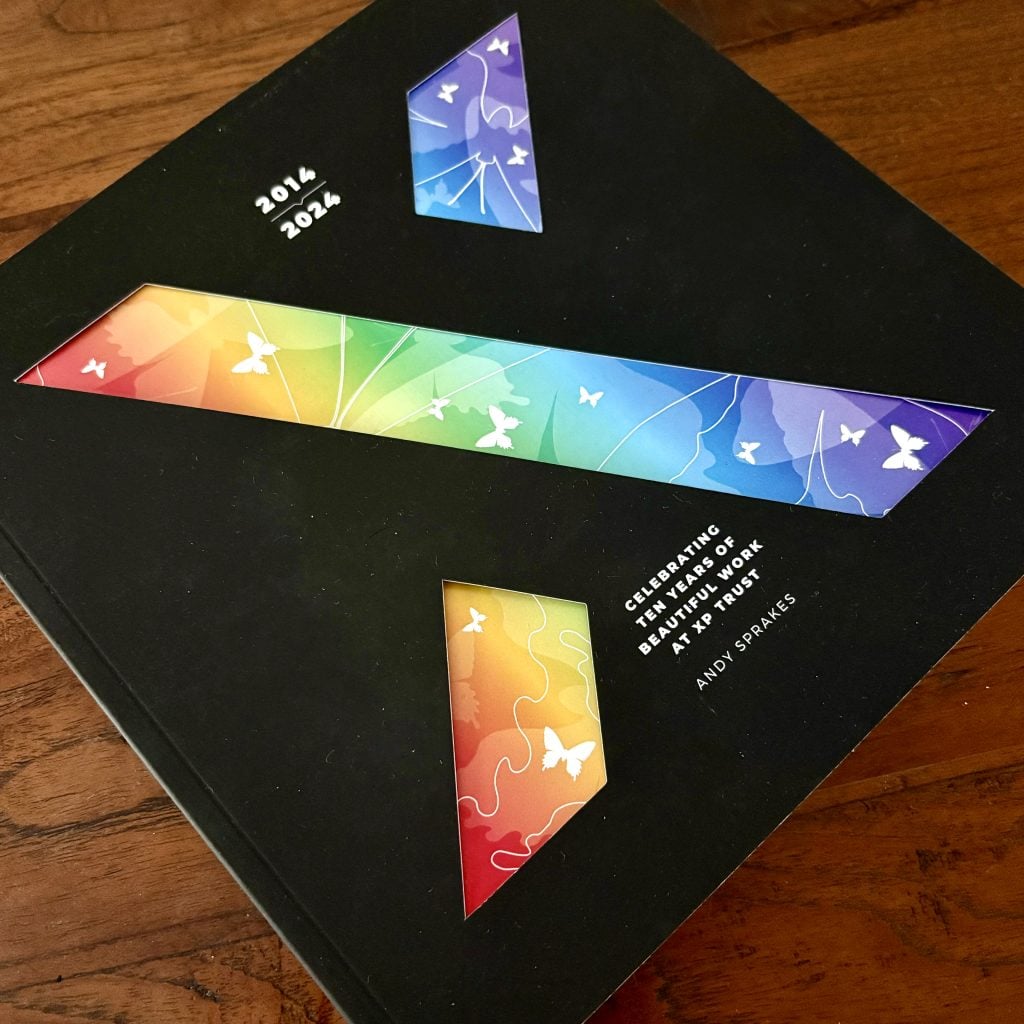
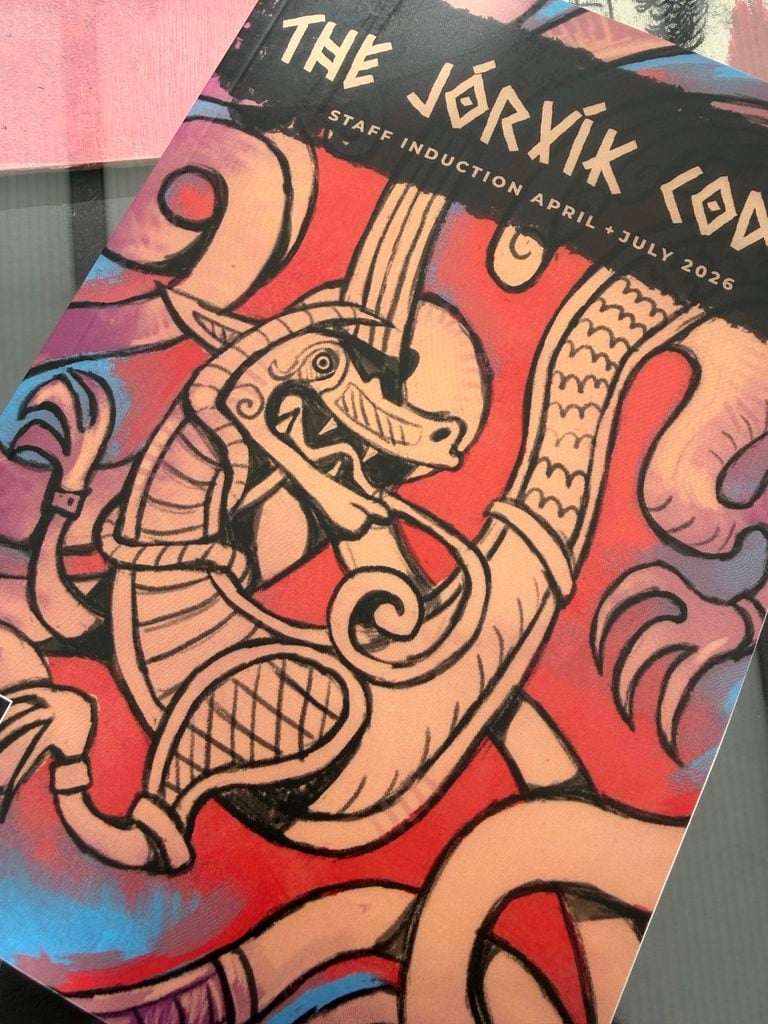
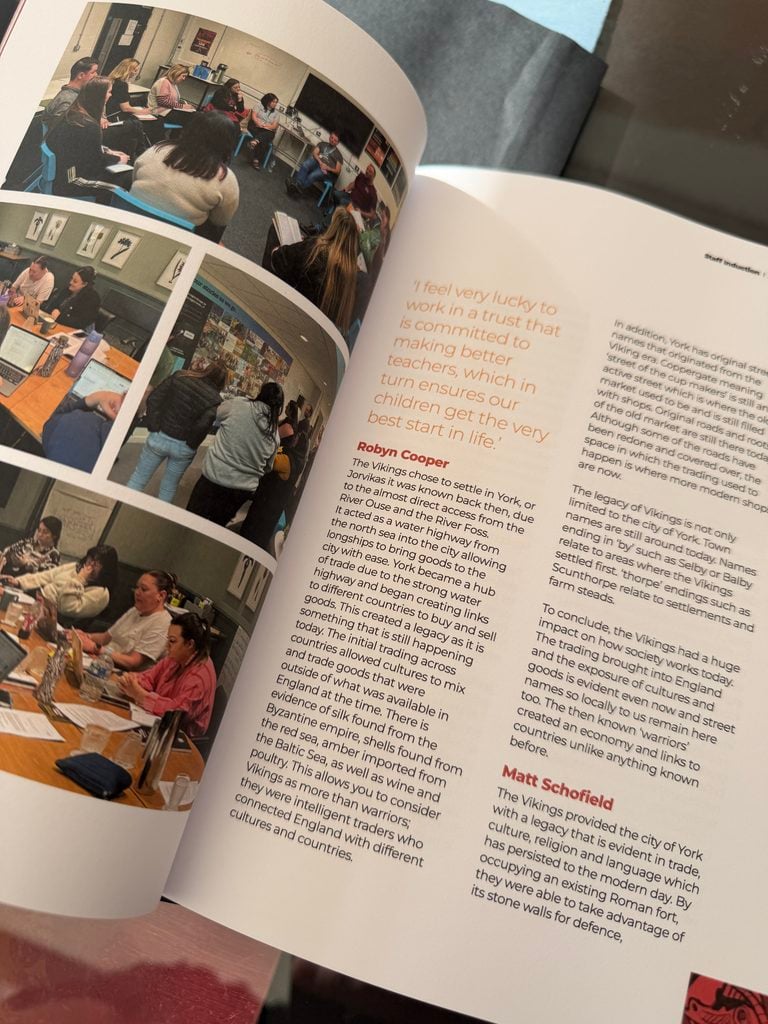
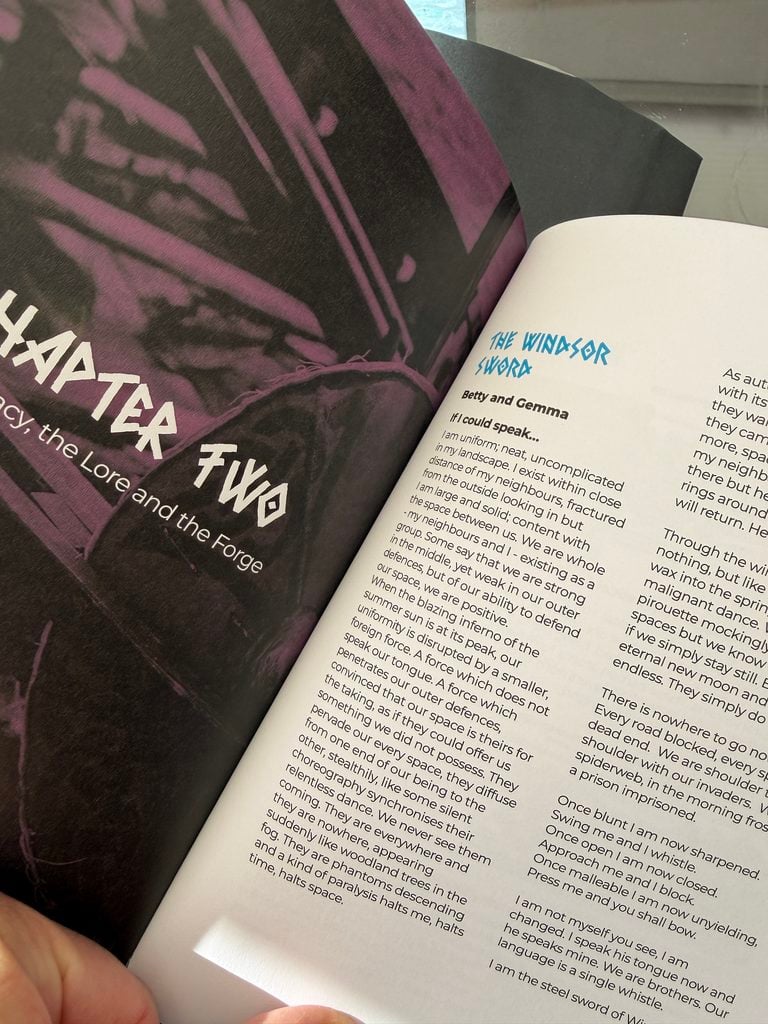
We recently reviewed, revised and reprinted our Curriculum Core Practices and provided all staff at XP’s Festival of Learning with a physical copy of the book. The Core Practices book is designed and written as a professional tool for you to reflect on, consider and apply in your daily practice to ensure that we are showing integrity to our curriculum model. I encourage you to actively reference the book by making notes and reflections in the spaces provided for this.

We have also placed a digital version of the Curriculum Core Practices on our Trust website so you can access online should you choose to do so. You can access the digital version here. This copy, in the spirit of sharing our stories, is available to anyone who visits our Trust website and is open source.

In addition, for all staff at XP, I have shared the link to the ‘Curriculum Core Practices Working Copy’. This is the google document where you can add ‘Notices, Wonders and Comments’ as you work through the published version. As I stated in the introduction to the book, the Curriculum Core Practices is a living document that is iterative and open to all staff to shape and critique. Changes that are agreed in the ‘working’ google doc will be added to the digital version.

We hope you enjoy engaging with this important document that is formed from our fundamental principles and designed to hold and protect the integrity of our model.

In Crew

Andy

Elevating Beautiful Work, Front Page News, Sharing Our Stories, Sharing Stories

Post navigation

← Older posts
  • Current Vacancies
  • Address and contacts

    XP School
    Middle Bank
    Doncaster
    DN4 5NG
    01302 898792
    [email protected]

    Follow XP School

    • Facebook
    • Twitter

    Quicklinks

    • Home
    • Calendars
    • Vacancies
    • MDM
    • FAQ’s

    XP Trust schools

    • XP Trust
    • XP School
    • XP East
    • XP Gateshead
    • Carcroft School
    • Greentop School
    • Plover School
    • Norton Infant School
    • Norton Junior School

    XP School is part of the XP School Trust.

    School website powered by Realsmart Logo