
How has conflict shaped our world?
In Autumn 2016 the Year 9 expedition was called Guns, Germs and Steel. This was a joint expedition between the Humanities and STEM team, covering History, English, Physics and Statistics.
The learning targets were :
- I can develop an informed personal response on a literary text.
- I can explain the key events of World War One and empathise with a soldier’s perspective.
- I can analyse the ways meaning is shaped in a selection of poems studied
- I can analyse sources to show my understanding of historical interpretation
- I can explore the impact of the technological advances of warfare.
- I can utilise statistics and charts to determine the impact of a conflict
The immersion for this expedition took the student on a journey to prepare for battle. It was a three day event which started with an Army drill where students lined up and were roll called by number before heading to the ‘basecamp’ to test weapons. The students were reminded that they had no choice in the matter of being signed up for war as part of the conscription phase and extracts from a real diary were read out.
The students made a catapult and then tested it, along with a slingshot, spear (javelin), hand grenade (shot putt) and bow and arrow. They analysed the data and worked out which weapons would be most effective, the speed and the weapons’ limitations prior to visiting the Royal Armouries in Leeds as part of our fieldwork to research World War One.
The first case study focussed on the First World War. Areas covered were: the context of the times; the causes of the war; significant events that occurred in the conflict; how the war ended and the consequences of the conflict. This enabled students to develop their historical enquiry and research skills in readiness for Case Study Two. In addition, students studied poetry from the First World War and began to read The War of The Worlds by HG Wells.
The second case study built on the first, by allowing the students to apply their enquiry and research skills by analysing a specific conflict. The students utilised different statistical methods on the data they sourced. As a result, the students determined their own criteria to design and develop a beautiful yet informative infographic that displayed key components to explain the conflict that students had been assigned.
The War of the Worlds by HG Wells underpinned both case studies as students analysed this literary text in terms of its context and themes and how they related to the changing world at the beginning of the twentieth century.
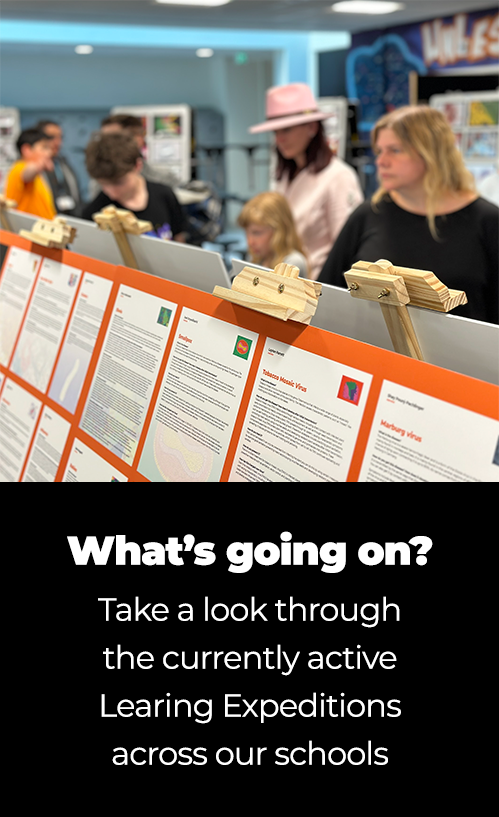
The expedition culminated with a celebration of learning to share the research and display their infographics to an authentic audience.
Final products – Infographics